By Briana Bass, Christian Romance Author, Devotional Writer & Certified Professional Coach
AI is a hot topic. Creatives like myself wonder what AI means for the future of our industries. I’ve personally witnessed AI replace customer service workers, illustrators, and photographers. When I worked in higher education, AI was (and still is) a major conversation.
Artificial intelligence permeates our lives. The spellchecker on your phone? That’s AI. Your internet search engine? Powered by AI. While the discussions seem contemporary, AI has actually been around since World War II. AI itself isn’t anything new. Where it’s heading, well, that’s up for debate.
So how do Christians enter the conversation? There are theological arguments surrounding the creation of life and supplanting God, but I’ll leave that to the theologians. I believe our focus should be on the effect of AI on our humanity. Specifically, the effect of AI on the attributes that make us human.
The Fall of Art and Music
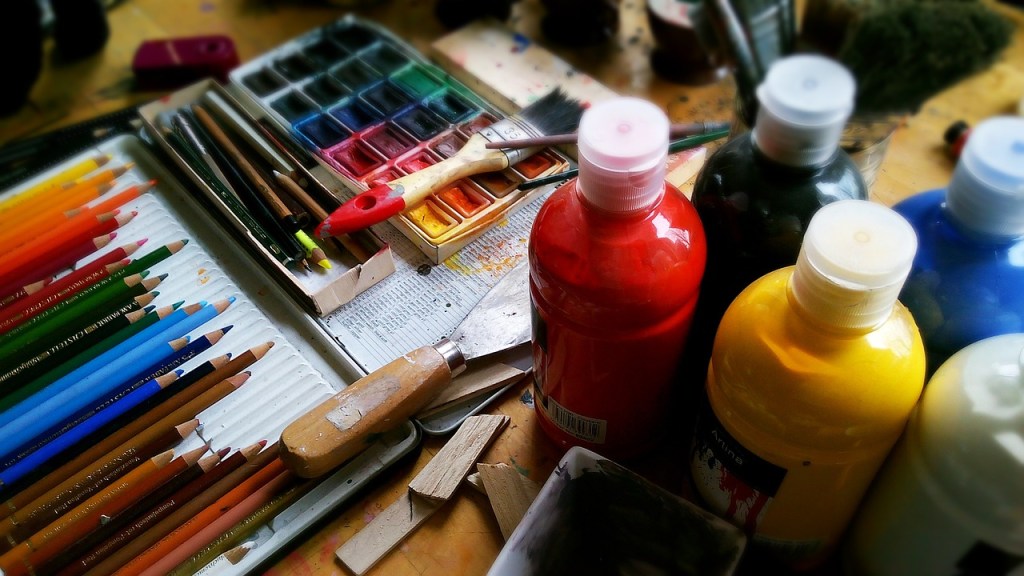
Human beings are uniquely creative. We make art and write books. We dance, act, and sing. No other animal on Earth is as creative as we are. God made us this way on purpose: “So God created man in his own image, in the image of God created he him; male and female created he them” (Gensis 1:27 KJV). God is creative, and if we are made in God’s image then we were made to be creative, too.
If our humanity is defined by creativity, then why do we so readily sacrifice our creativity for the sake of scientific invention? Ironically, invention itself is a creative process. Yet we freely allow artificial intelligence to usurp creativity. Christians should be concerned by this application of AI. It takes time for a person to complete a creative work – AI can do it in a fraction of that time and for a fraction of the cost, making the final product cheaper to produce, distribute, and market. Eventually, people will stop trying to be creative because they can’t compete economically with AI.
We cannot allow AI to strip us of that which makes us human. Other pack animals are loyal, loving, and communal. Some even use tools and have their own language or form of communication. Creativity is what sets mankind apart. If we lose our creativity, then what separates us from the rest of the animal kingdom?
Will The Real Villain Please Stand Up
While creativity is a hallmark of our humanity, we sometimes use it for evil. Have you seen the headlines about teens using AI to bully their classmates? The teens manipulate photos and share them online. AI doesn’t create the images – people do. The technology is simply a tool; humans are still the brains behind the operation.
Any tool can be wielded as a weapon. We know our history. We know how easy it is for human beings to take something intended for a good use and twist it for evil. AI is no different. Neither is our creativity. We can create beauty or destruction, the Mona Lisa and the atom bomb. What sets AI apart is that it’s easy to access and use. You don’t have to be a skilled artist or a genius scientist to tell AI what you want it to create.
AI is not inherently evil; how we apply it can be. Christians cannot ignore how AI is being used for harm. When engaged in discourse around AI, we must vehemently condemn the bad actors who use AI maliciously. Abusing creativity is by no means unique to the twenty-first century. How humans can go about it, incorporating technology and disseminating toxic content, has changed dramatically due to the rise of AI.
The Time to Speak is Now
Christians must speak up about the perils of AI supplanting human creativity and being used to inflict harm. Silence is not an option. We stand on the edge of a precipice. If used appropriately, AI can be a revolutionary tool to lead us into the future. But if left unchecked, AI has the possibility to destroy that which makes us human.
We have a choice to make. Do we stand on the sidelines, or do we stand up for ourselves? Do we support music and the arts, or do we allow technology to rule as king? Again, I reiterate that AI itself is not the villain in this story. It’s all in how we use it.
 Briana Bass