By Briana Bass, Christian Romance Author, Devotional Writer & Certified Professional Coach
We interrupt our regularly scheduled blog series for a brief word about Halloween. The fruit of the Spirit series will resume next week.
Lately there’s been quite a bit of discourse surrounding Christians and Halloween. Should we celebrate the holiday? Should we celebrate Reformation Day instead? All Saints Day and All Souls Day? Can you even host a harvest festival or put pumpkins on your front porch?
Honestly, it’s gotten rather out of hand. A lot of the comments I’ve read prove a level of hypocrisy that I find uncomfortable, not to mention a lack of education. Somehow, we have failed ourselves when it comes to church history. We pick and choose which holidays are considered “appropriate” based on arbitrary rules. Or we become so legalistic that we take the fun out of it. So much of what we take as fact is easily debunked when we take the time to do the research.
Friend, I’ve done my homework. I love history (even minored in it in college) and when the chance to dive down the rabbit hole of holiday history came up, I jumped at it. What I found confirmed what I learned previously about the appropriation of pagan holidays and the rise of capitalism. I share these findings not to belittle anyone or start any arguments, but to show that what we often take as fact within Christian culture is actually fiction.
A Pagan History of Christian Holidays
If your thoughts around Halloween are that Christians should not celebrate because it is a pagan holiday, then you should also stop celebrating Easter and Christmas. And if you’re Protestant, then Valentine’s Day and St. Patrick’s Day are also off the table. For Catholics, that means no feast days for you. They all have pagan roots.
Our Christian holidays began as pagan celebrations that were appropriated by the Catholic Church. As Christianity spread, particularly in Europe, many Christians continued celebrating pagan festivals and holidays. Rather than reject these ancient practices, the Church folded them into the calendar and reworked them into Christian holidays. Many of the traditions associated with those pagan holidays remained including some of the names. For example, Easter is derived from the name of a pagan Saxon goddess. As for Christmas, it began as a Yule or solstice festival. Jesus wasn’t even born in December!
Other holidays, such as Valentine’s Day, have been appropriated by secular culture. (The trappings of the modern holiday, including candy hearts and exchanging cards, were well in place even before St. Valentine was removed from the official Catholic Church calendar in 1969.) Halloween also falls into this category. While there are still pagans who celebrate it as Samhain, most people treat it as a secular holiday. The focus is on candy, costumes, and trick-or-treating. While there may be some scares, it’s primarily fun for all ages.
To Celebrate or Not to Celebrate
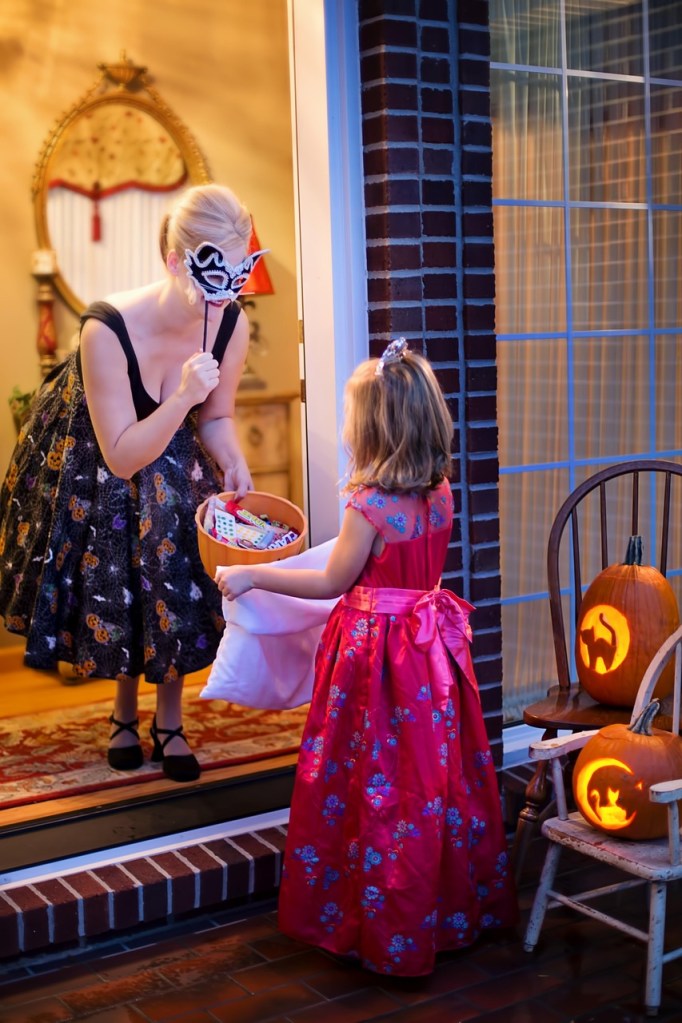
So, what does that mean for Christians? Like with any holiday or celebration, it’s a personal choice. Personally, I love Halloween. I appreciate its whimsy. Dressing up and passing out candy to the neighborhood children is a highlight for me. A lot of that is because I believe children should be innocent for as long as possible (especially in this day and age) and I believe that Halloween provides an opportunity for kids to simply be kids. Horror movies aren’t really my thing, but I do enjoy the family-friendly Halloween films and television specials. It’s a good time for the family to gather and spend quality time together. Halloween night is a time to connect with your neighbors, put a smile on a child’s face, and treat yourself to something sweet. That’s not a bad thing.
Many churches host harvest festivals or trunk-or-treats as alternatives to traditional Halloween parties and trick-or-treating. Some of that is to make trick-or-treating safer, especially in rural areas. But it’s also a way to incorporate Christ into a holiday that doesn’t usually see Him. There are loads of Christian pumpkin and Halloween décor, treats, and costumes on party websites, plus trunk-or-treat kits. They’re actually super cute, and they include scripture references and keep the scare level at zero. Maybe that’s the type of Halloween we Christians could get behind.
Like with any celebration, Halloween is what you make it. If you prefer to decorate for harvest, then go for it. But don’t deny yourself or your children the opportunity to decorate pumpkins. Who says Halloween has the monopoly on that particular activity anyway? Candy corn is associated with both autumn and Halloween, so why not buy a bag? (Unless you’re me, because I absolutely despise candy corn). And if you’re like me, go ahead and wear a costume and hang a ghost on the front porch and pass out candy to the kids. It’s not like we’re playing with Quija boards. We’ll be fine.
It’s a Celebration
Let’s get back to the question. Yes, Christians can celebrate Halloween. In fact, I’m listening to Halloween music as I write this post. Not all the songs on this compilation CD are specific to the holiday, but arguments could be made. They’re mostly secular classic rock and 80s songs.
If you’re still unsure about Halloween, I strongly recommend that you take some time to do the research. But don’t be a hypocrite. You can’t pick and choose. If you decide to not celebrate Halloween because of its pagan roots, then you have to stop celebrating Christmas and Easter too. And if you want to celebrate Halloween, then celebrate it! Don’t let other Christians steal your joy.
Happy Halloween!
 Briana Bass